How Much Does a Smart Home Cost? KNX vs Lunet for New Builds and Homes You Already Live In
Most of a smart home’s cost goes on cabling and work inside the walls. Here’s why Lunet, our smart-home app that runs on your existing wiring, costs a fraction of KNX, and when KNX still makes sense.
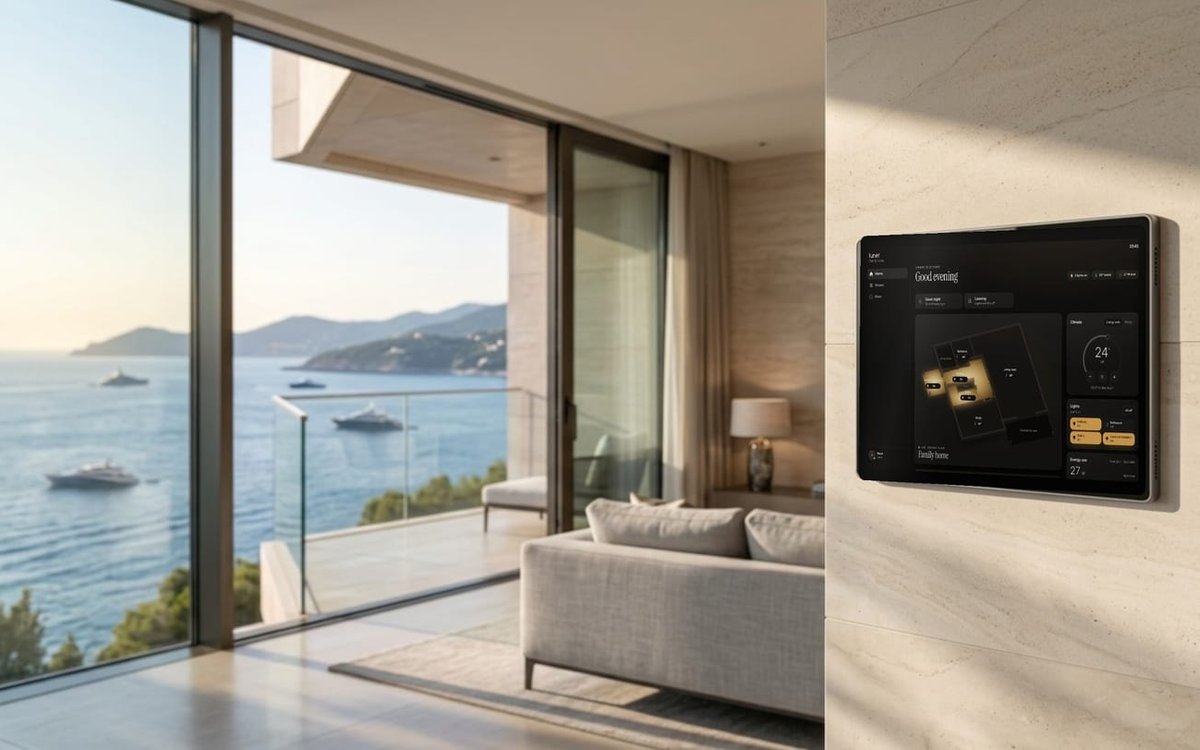
“How much would a smart home cost me?” I get asked that at almost every first meeting. Often it’s someone who has already had a KNX quote, looked at the total at the bottom and quietly decided it isn’t for them.
I understand. But that conclusion is usually too hasty. The price of a smart home has surprisingly little to do with how “smart” the house is. It depends far more on one down-to-earth question: do you need new wiring run through the walls?
Let’s start with where the money actually goes.
Where the money goes in a smart home
In a wired system, the biggest share goes on cabling. Every switch, sensor and light is connected by an extra communication cable called a bus (a shared “wire” the devices use to talk to each other). That means new conduits, chasing channels into the walls and new wall boxes.
Then there’s the equipment in the distribution board: actuators (modules that physically switch circuits on and off), power supplies and interfaces, often in a bigger board. And there are the hours of labour, because every device has to be designed in, addressed and configured.
The app on your phone is the smallest line on the bill. So “how much does a smart home cost?” really means “how much work has to happen inside the walls?”
KNX: an excellent system, but it needs open walls
We rate KNX highly and we install it. It’s an open European standard for building automation, reliable, wired and not tied to a single manufacturer. It makes the most sense in a large new build where the design calls for every circuit to be on a bus from the very first drawing.
The catch is that the bus cable has to go in before plastering, while the walls are still open. In a home you already live in, that means chasing walls, dust in every room, fresh plaster and repainting, on top of the price of the system. Other wired systems are no different, and that’s usually where owners of lived-in homes give up.
Lunet: a smart home on the wiring you already have
In homes from Šibenik to Zadar we kept hearing the same wish: the comfort of a smart home, without breaking open the walls. So we built Lunet, our own smart-home app.
The idea is simple. We fit a small module into the existing wall box, behind the switch you already have. The switch stays where it is and works just as it always has. You can now also turn the light on from the app, or switch off every light in the house with one tap.
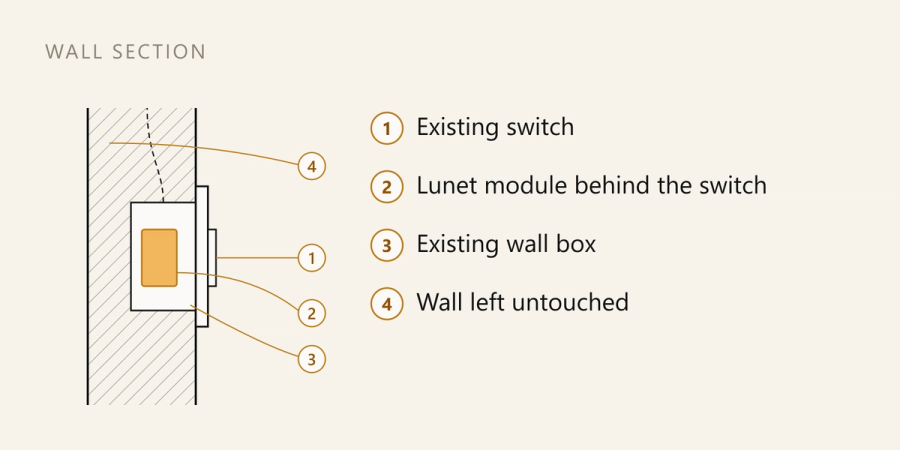
Day to day, it looks like this:
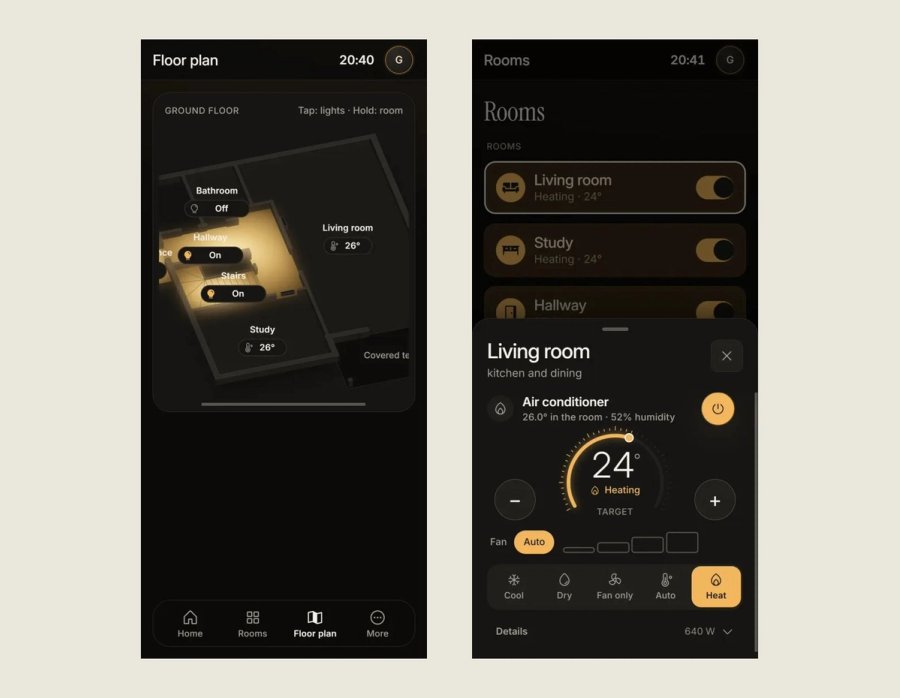
- Lights, heating, air conditioning and sensors in one app, on iPhone, Android, a computer or a wall panel in the hallway.
- A live floor plan of your home. See which lights are on and how warm each room is, and tap a room to switch its lights on or off.
- One-tap scenes: “Good night” switches off every light, and “Leaving” turns off the lights and air conditioning as you head out.
- It works when the internet is down. Lights and heating run locally; the internet is only needed for control from away and for notifications.
- No passwords: you sign in with an emailed code, your face or your fingerprint. Each home is kept separate, and the data stays in the EU.
- Everyone in the household has their own access, while guests control devices only, never the settings.
Lunet or KNX: a straight comparison
For everyday comfort there’s little between them: lights, air conditioning, heating, scenes and remote control either way. The difference is what has to happen first. KNX needs new wiring. Lunet works with what’s there, keeps the air conditioners, thermostats and sensors you already have, and goes in while you carry on living in the house. In a new build it goes in alongside a standard installation, with no separate bus cable to every switch.
That’s also why Lunet costs a fraction of what KNX or a similar wired system costs: the most expensive part of the job, new cabling and work inside the walls, simply isn’t needed. The exact figure depends on the number of rooms and what you want to control, so I won’t guess at one here. But the gap is wide enough to put a smart home within reach of a family flat, not just a luxury villa, and that holds for a house you live in and one that’s still being built.
What I tell most clients: for almost any home, lived-in or still being built, Lunet gives you the comfort you’re after at a fraction of the price. KNX makes sense when a project specifically calls for a fully wired system, and then we’re happy to do that too.
Three plans: from family home to holiday let
Lunet comes in three plans, and you can switch whenever you like.
- Lite is for the home you live in every day: the whole house in the app, at home and away, with the floor plan, scenes and access for the whole household.
- Care is for holiday homes and houses that often stand empty. On top of Lite you get continuous monitoring: if there’s a leak, a risk of freezing or the house goes offline, you’re alerted at once on your phone and by email, and you get energy reports too. For a house by the sea that you only check on now and then in winter, that’s real peace of mind.
- Rental is for apartments and holiday homes you let. Guests get access by QR code and control only their own room. The property is prepared before they arrive and switches to empty-property mode after check-out, and you see all your properties in one view.
A smart home is only as good as the wiring underneath
Smart-device sellers rarely mention this. We’re an electrical installation contractor first, so before fitting Lunet we always check the wall boxes, the distribution board and the protective devices. If the wiring is old or damaged, we’ll tell you straight away, and we can put it right in the same visit.
Not sure about yours? Our guide Do I need to replace my electrical installation? will help you judge. For new builds we carry out the complete electrical installation, distribution boards and certification, and plan Lunet (or KNX, where a project calls for it) alongside the wiring from day one.
The most common mistakes when choosing a smart home
- Comparing equipment prices, when the real cost is in the walls and the labour.
- Giving up on a smart home because of one KNX quote, without asking whether new wiring is needed at all.
- Putting a smart home on tired wiring. No app will fix a loose connection in a wall box.
- Choosing a system only one person in the house can use. A good smart home works for everyone, from the kids to grandma.
How Lunet would look in your home
Lunet is easiest to understand on the floor plan of your own house. There’s more about the app at lunethome.com and on our smart home systems page. Send us a floor plan, or simply describe your home, and we’ll show you how Lunet would work there and prepare a quote to suit.
Request a quote and we’ll be glad to take a look at your home.
Related Articles

What to Look for in an Electrical Subcontractor on Your Construction Project
What Is an RCD Protective Switch — and Why It Could Save Your Life?