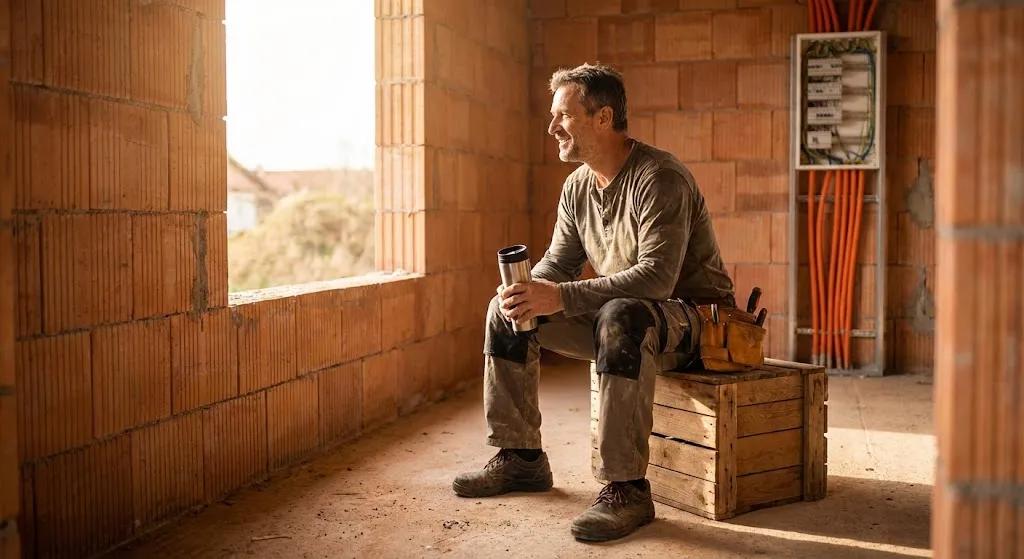
What to Look for in an Electrical Subcontractor on Your Construction Project
Capacity, digital transparency, and complete documentation — what general contractors and investors in Dalmatia need from an electrical subcontractor, and what it looks like in practice.
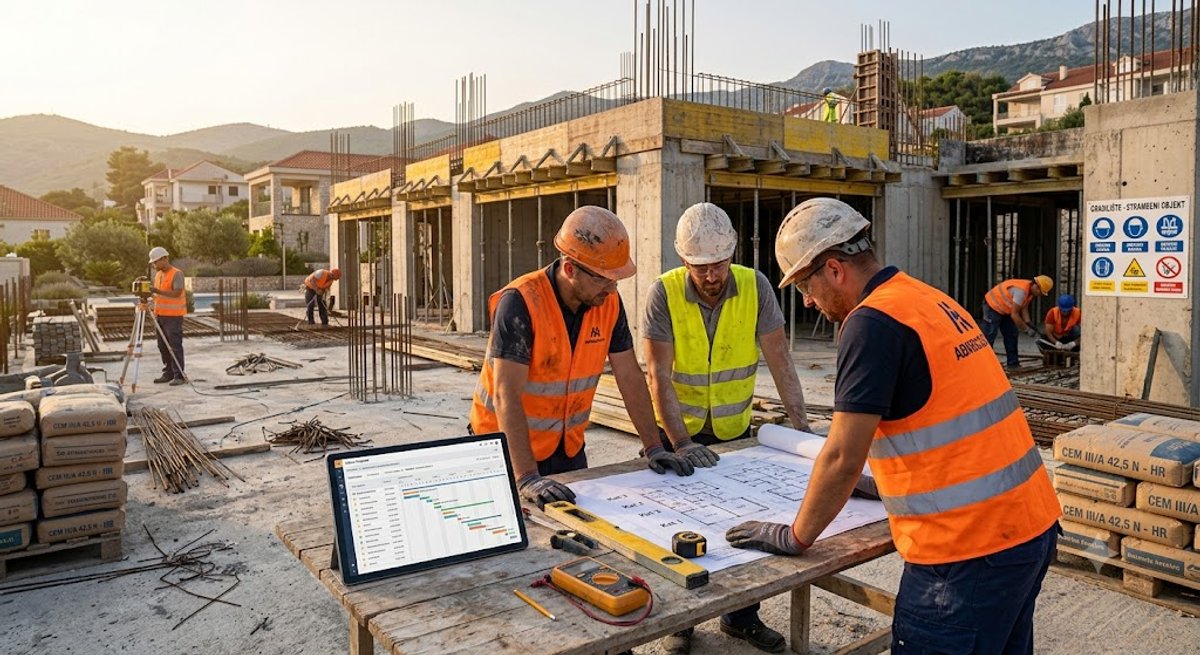
Every project has a critical path. On residential and commercial buildings, electrical work is typically one of the first trades on site and one of the last to leave — between those two points lies more than a year of coordination, plan adjustments, waiting for concrete to cure, and paperwork that must be in order before the final inspection. What kind of subcontractor can your project afford to work with?
In Dalmatia, we work on buildings of all sizes and types — from private homes to apartment buildings, commercial spaces, and infrastructure projects. Through that experience, we've learned what general contractors and investors actually need from an electrical subcontractor, and where things most often go wrong.
Capacity That Keeps Up With Your Schedule
The biggest practical problem with small contractors isn't quality — it's capacity. One crew can cover one project at a time. When a delay hits, or a second site urgently needs attention, there's no reserve.
We operate through a carefully selected network of subcontractors we've worked with long-term and hold to our own standards. This means we can cover multiple sites in parallel without any drop in quality — same technical standards, same oversight, same documentation on every project. If you have several buildings in the same period, or a project that needs larger crews than standard, that's not an obstacle.
Digital-First — Transparency Without Having to Chase Updates
One persistent source of friction on construction sites is information asymmetry: the general contractor doesn't know exactly where the project stands, the investor doesn't know what's been invoiced, the supervising engineer is looking for documentation that isn't available.
Our approach is digital from day one. Every partner and investor gets access to a portal where they can track work progress, current documentation, and certification status in real time — without having to call and ask. Quotes are itemised (not lump-sum), every scope change is documented, and the complete certification documentation is ready on the day work finishes — not a week after the final inspection.
This isn't a marketing phrase. It's a direct response to a specific problem we've seen on site: projects delayed because physical work and paperwork were never synchronised.
A Range of Project Types — One Partner, Multiple Building Categories
We're not limited to one type of construction. Our portfolio covers:
- Residential buildings and multi-unit developments — main electrical systems, low-voltage systems, shared lighting, fire and access systems.
- Commercial and office spaces — structured cabling infrastructure, network systems, security cameras.
- Hospitality and tourism properties — hotels, apartment complexes, villas with outdoor installations and pools.
- Infrastructure projects — public lighting, traffic signals, transport systems.
For a general contractor working across different project types, this means one partner instead of multiple specialised subcontractors for each building category.
Documentation and Certification — Off Your Administrative Plate
Final inspection documentation is a burden that lands on the general contractor if the electrical subcontractor isn't prepared. We handle this on our side: certified measuring instruments, experience with inspectors, and complete electrical documentation submitted in exactly the form the technical inspection requires.
All certification is carried out by our certified team — no need for the GC to engage a third party for installation testing. For a detailed breakdown of what the inspection covers and what regulations require, see our investor's guide to electrical installation regulations.
What the Collaboration Looks Like in Practice
On a new project, you can expect from us:
- Itemised bill of quantities — no lump-sum pricing, with a clear breakdown by project phase.
- Coordination with the designer — we read electrical drawings, communicate directly with the project designer when questions or adjustments come up.
- Adaptation to your schedule — we arrive when you're ready, and coordinate with other trades on site.
- Direct visibility for the investor — the investor tracks work status in real time, without filtering through your office.
Looking for a Subcontractor for Your Next Project?
If you're preparing a project in Dalmatia — from Šibenik, Vodice, and Zadar to the surrounding area — and you need an electrical subcontractor with the capacity, digital transparency, and complete documentation to match, get in touch.
Browse our main electrical installation services and other services, or contact us for a free scope and cost assessment of your project.
Related Articles
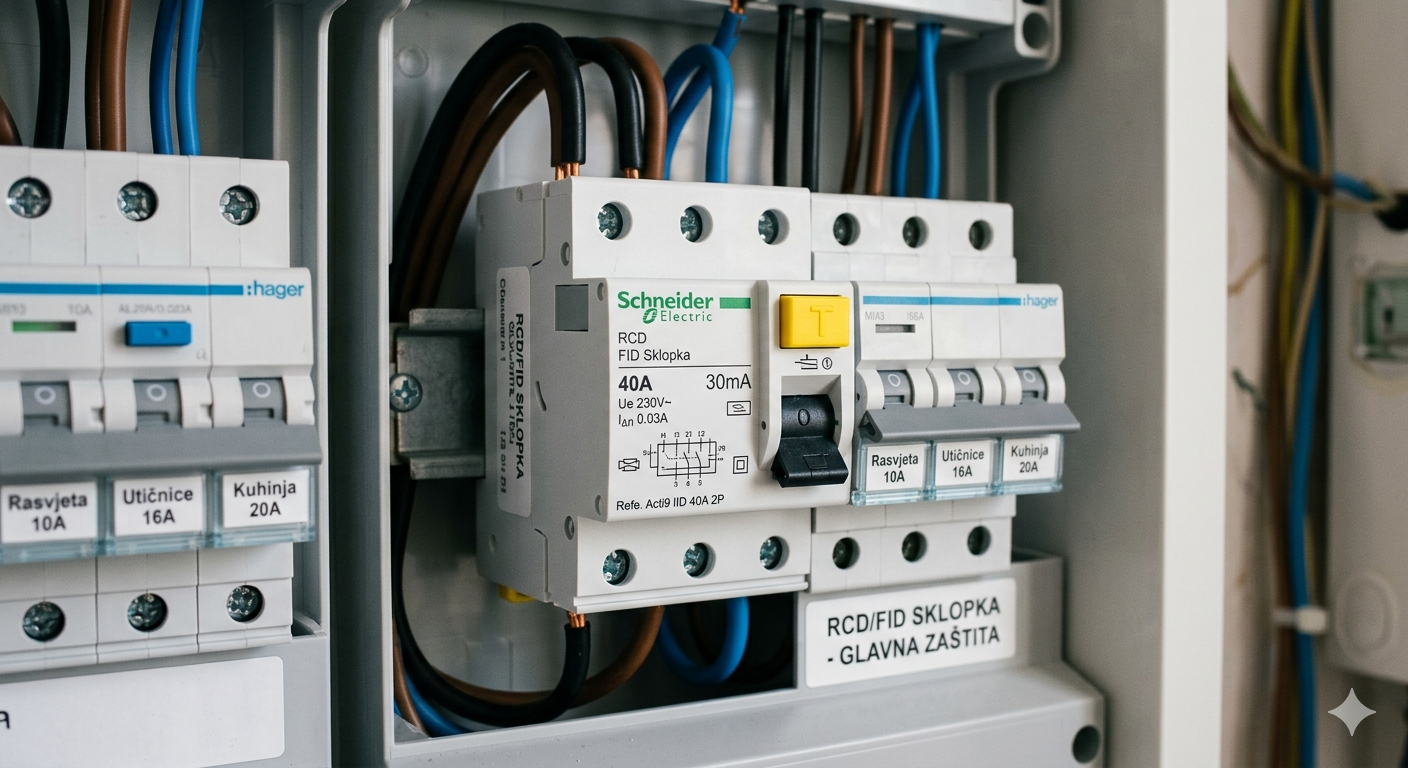
What Is an RCD Protective Switch — and Why It Could Save Your Life?
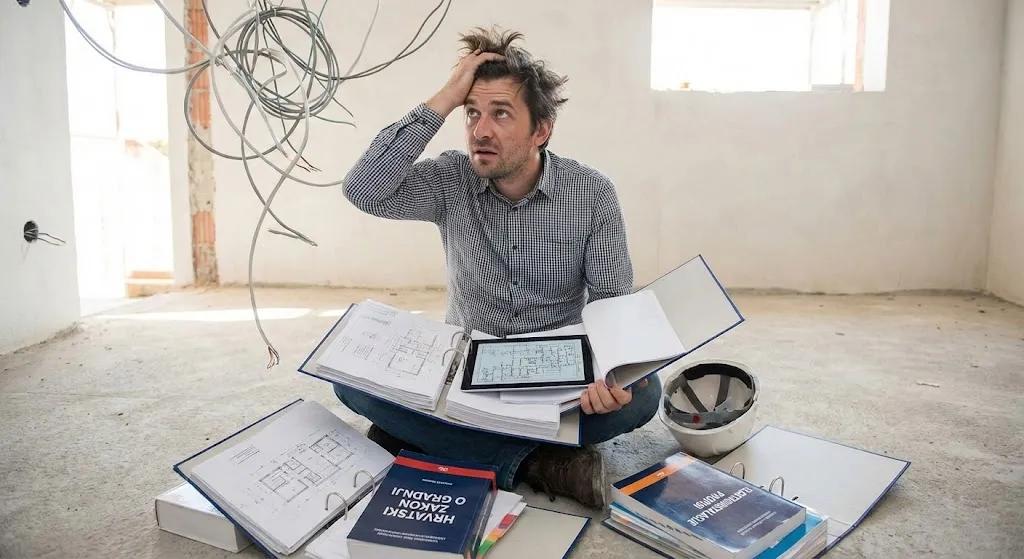
Electrical Installation Regulations in Croatia — A 2026 Guide for Investors