Surface-Mounted Electrical Installations in Old Stone Houses – Yes or No?
Buying an old stone house often brings a dilemma: how to run electricity without destroying the stone? Learn when surface-mounted installation is the right solution and how to execute it beautifully.
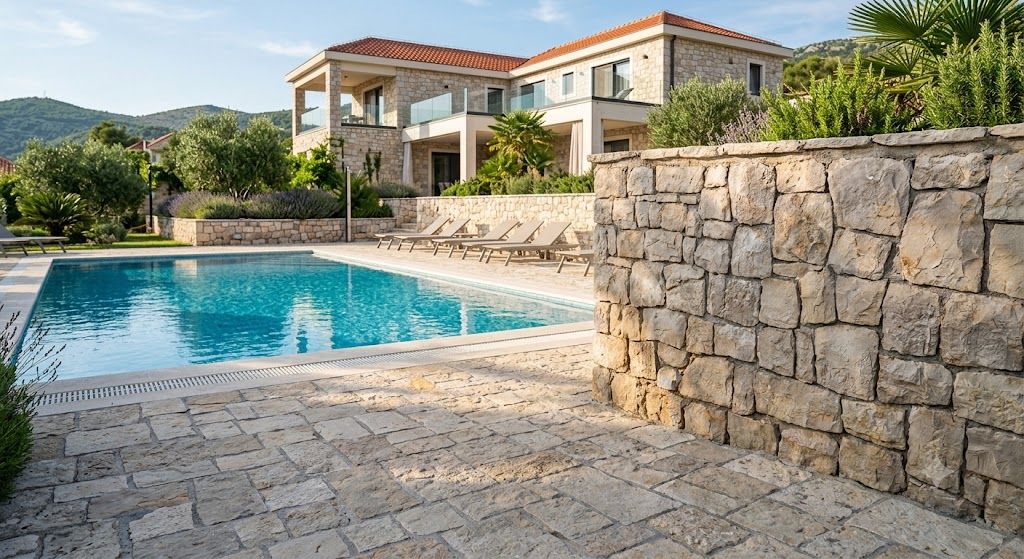
Buying an old stone house in Dalmatia or the interior of Istria is often the fulfillment of a lifelong dream. The scent of antiquity, walls over 60 centimeters thick, and the unique texture of hand-carved stone give a home a soul that new construction can rarely replicate. But as soon as renovation begins, homeowners face their first major challenge: how to run electricity without destroying the very thing they bought the house for?
In standard new construction, the solution is simple – cutting channels in brick, laying conduit, and smoothing over with plaster. However, with authentic stone walls that you want to keep exposed, this method is not only technically difficult but also aesthetically undesirable. Electrical installations in stone houses require a special approach, patience, and above all, a good vision.
Why the Classic Approach Often "Doesn't Work" Here?
When it comes to electrical installation work in old stone buildings, we face irregular structures. Stone isn't flat, joints are often fragile, and sometimes walls are so hard that any aggressive chiseling could compromise the structural integrity or irreversibly damage the stone face.
Additionally, conservation requirements often prohibit any intrusion into the stone structure itself if the building is protected. This leads us to the key question: Is surface-mounted electrical installation a solution you should embrace or avoid?
Surface-Mounted Installation: From Necessary Evil to Premium Aesthetics
For a long time, visible installations were seen as improvisation, something done in garages or cellars. But in modern architecture and the renovation of traditional buildings, surface-mounted installation has become a powerful aesthetic element.
When Is Surface-Mounted Installation Technically Necessary?
There are situations where you simply have no choice. If you're renovating a space where the stone wall is in perfect condition and you don't want to (or aren't allowed to) hide its beauty behind plaster or drywall, surface-mounted cable routing is the only way. Also, in situations where walls are too thin for deep cutting, with an adjacent room on the other side, the surface-mounted option saves the day.
Aesthetics with Character
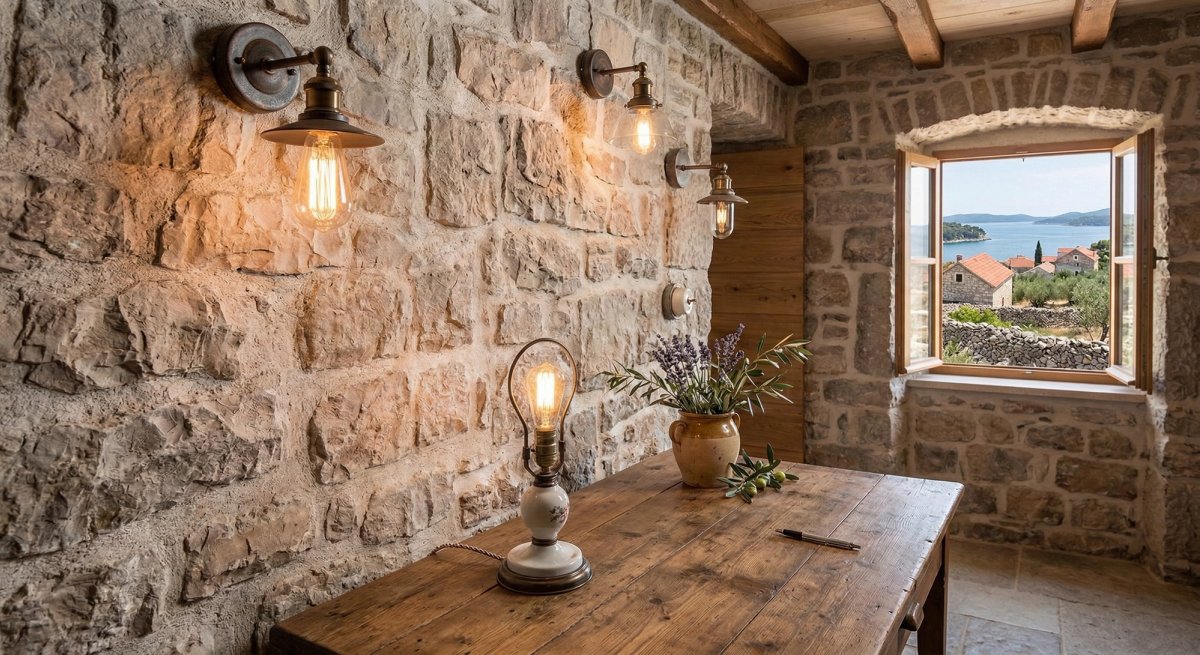
Imagine an old tavern with exposed wooden beams. Instead of white plastic cable channels (the biggest enemy of stone houses), we can use:
Copper or zinc metal conduit: Gives the space an industrial or "vintage" vibe that pairs perfectly with stone.
Textile braided cables: Combined with ceramic (porcelain) insulators, these cables take us back to the early 20th century and look incredibly authentic.
Retro switches and outlets: Today, premium series made of porcelain, copper, or brass are available on the market, mounted directly on the wall and becoming interior decoration.
Golden Rules of Planning: How to Execute It with Quality?
The difference between a "patched-up" installation and thoughtful design lies in route planning. With surface-mounted solutions, there's no hiding mistakes.
Symmetry and geometry: Conduit must follow the lines of architecture – whether running parallel to wall edges, floors, or beams. Any "diagonal" cable routing looks like a mistake.
Combined system: The best results are achieved through combination. Main routes (verticals and horizontals for high-consumption appliances) are run through the floor (screed) or above a suspended ceiling, and we only "emerge" onto the stone wall where we need an outlet, switch, or lamp.
Using joints: Experienced craftsmen know how to hide thin cables in the joints between stones. This requires precise cleaning of joints and repointing, but the result is a nearly invisible installation.
Most Common Mistakes That Stone "Doesn't Forgive"
A lot of effort and money has been invested in Dalmatian stone houses, so avoid these common oversights:
Afterthoughts: Adding outlets "on the go" when walls are already finished. The result is usually an ugly plastic channel cutting across the middle of the wall.
Cheap materials: White plastic (outlets, conduit) on gray or brown stone visually "screams" and nullifies all the effort put into interior design.
Misalignment with furniture: Since surface-mounted installations are fixed and visible, any change in furniture layout (e.g., moving a wardrobe over an outlet) becomes a problem.
Conclusion: Yes or No?
The answer depends on your personal style and the condition of the building.
YES, if you want to maintain 100% stone authenticity, love the industrial or retro style, and are willing to invest in quality metal conduit or retro materials.
NO, if you prefer a minimalist, modern look without visible details on walls. In that case, you'll need to make compromises with partial plastering or wall cladding.
Every stone house is unique and there's no universal recipe. Our recommendation is always the same: respect the stone, but don't be afraid to show the installation if it's masterfully executed. A well-designed surface-mounted installation doesn't disfigure a wall – it adds an extra layer of story.
Do You Have Additional Questions About Renovating Your Stone House?
Whether you're unsure how to get through a wall a meter and a half thick, or you're looking for advice on choosing materials for surface-mounted wiring, feel free to contact us. We're here to share our experience and help your old beauty shine in full glory with maximum safety.