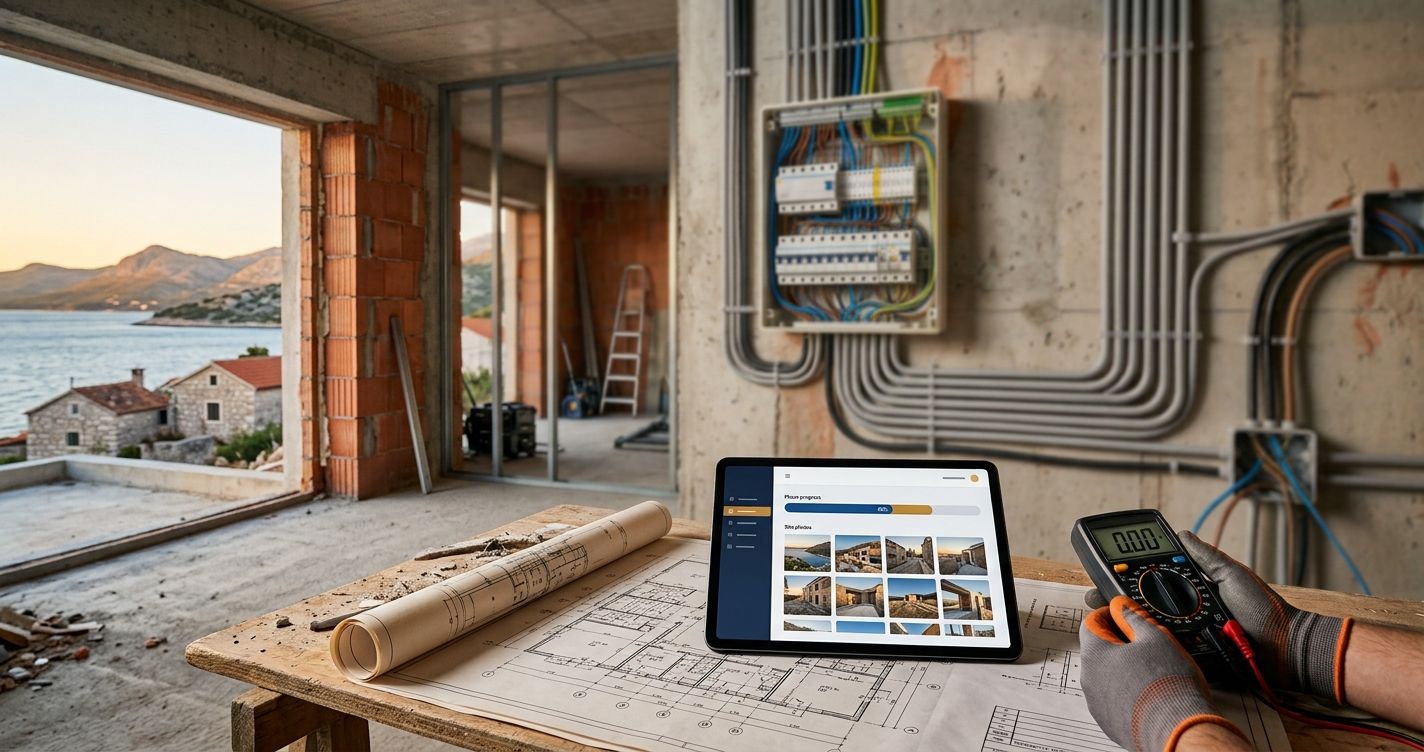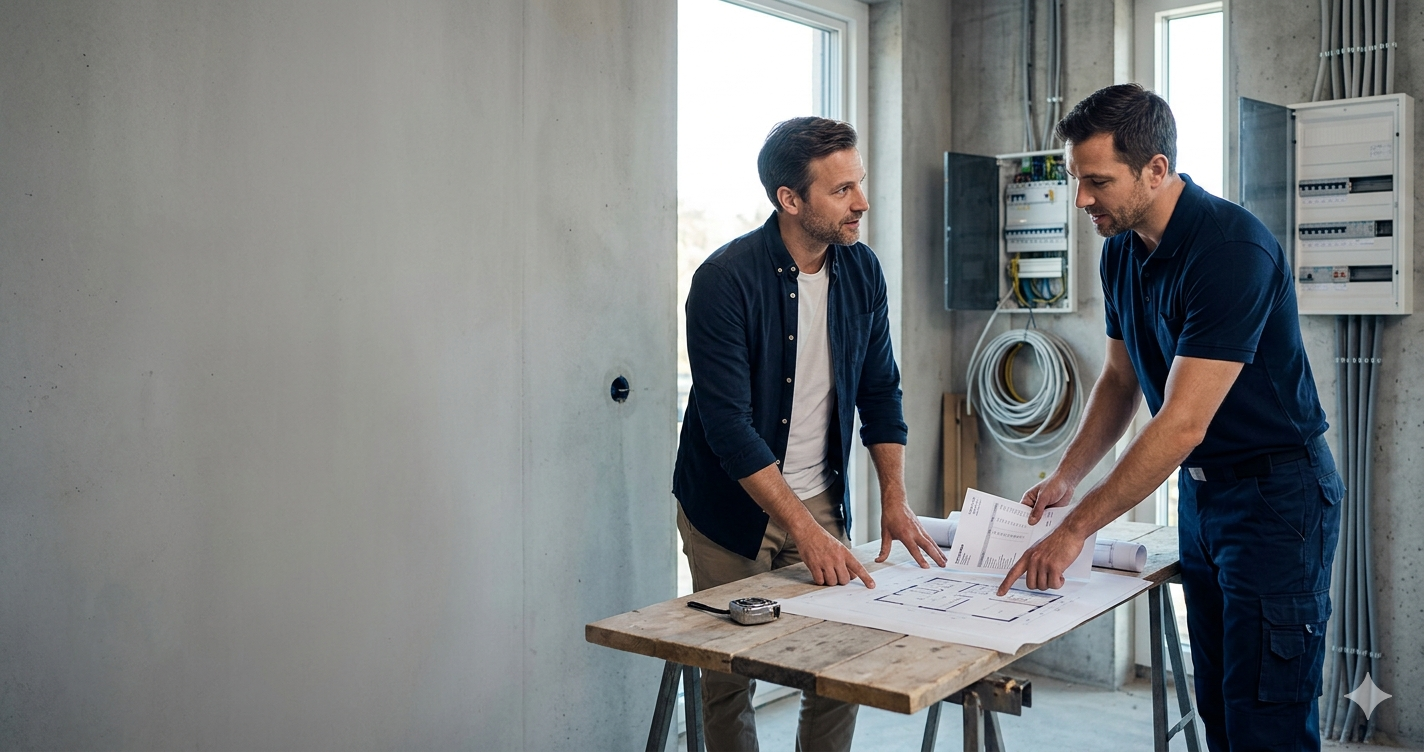
How Do We Inspect Electrical Installations Before Commissioning?
Before a space is filled with life, it must pass the most important test. Learn exactly what we measure, why those measurements are crucial, and how the inspection report protects your home.
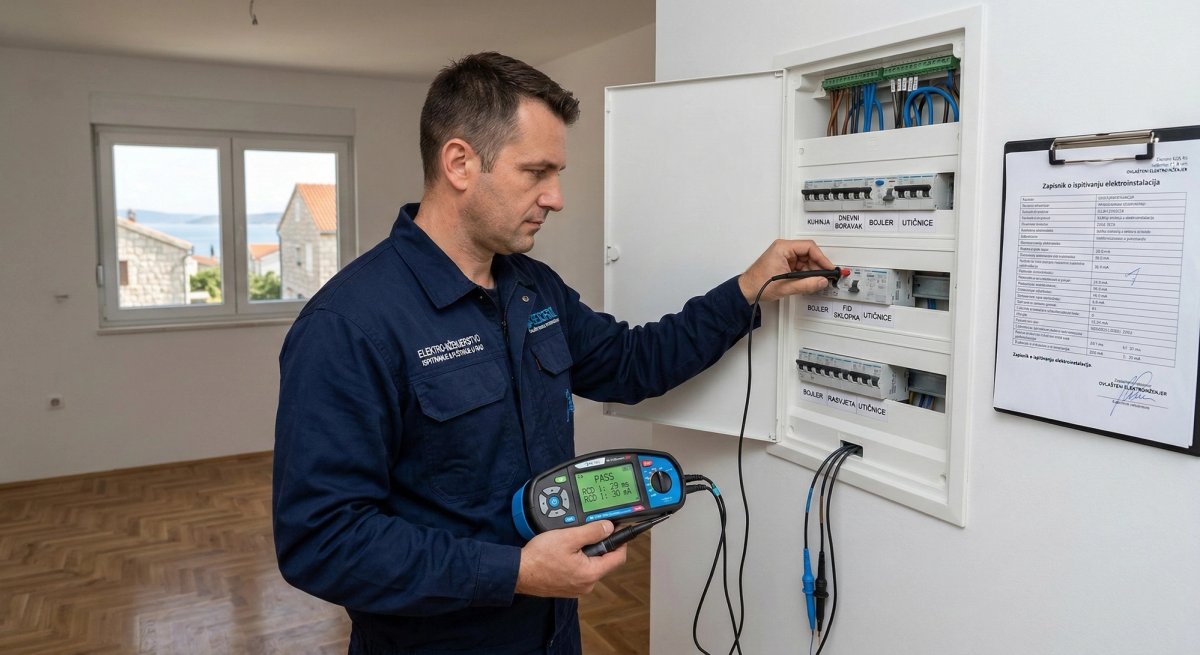
Completing work on a new house or apartment brings great excitement, but before the space is filled with furniture and life, it must pass the most important test – commissioning the electrical installations. Many investors think this step is merely a formality or just "flipping a switch," but in reality, it's the only moment when professionals guarantee that your home is safe from fire and electric shock.
As an engineer who has spent hundreds of hours with measuring instruments in the field, I can confirm: electrical installation inspection isn't about writing paperwork for a technical review, but rather a detailed "scanner" of everything hidden within the walls. In this article, I'll explain exactly what this process looks like, what we measure, and why these results are crucial for your safety.
What Does Commissioning Electrical Installations Actually Mean?
Simply put, it's a controlled process where we prove that all electrical installation work has been performed according to the project and current standards. The goal is to eliminate human error. Even the best electrician can overlook a loose connection or accidentally damage cable insulation during drywall or plaster installation.
This phase is carried out before the system is connected to the grid (voltage) or immediately after, depending on the type of measurement. Without this check, turning on any appliance is a risk.
Inspection Timeline: What Does the Process Look Like in Practice?
Professional electrical installation testing follows a strict sequence. We don't start with electricity, but with a physical inspection.
1. Visual Inspection (First Line of Defense)
Before I even take out measuring instruments, I walk through the entire building. I check whether outlets are firmly installed, whether all conductors in the distribution panel are properly tightened, and whether wire colors match their function (blue for neutral, yellow-green for grounding).
Example from practice: It often happens that other tradespeople (e.g., kitchen installers) accidentally pierce a cable with a screw. A visual inspection won't catch this, but the next steps will.
2. Insulation Resistance Measurement
This is perhaps the most important electrical measurement. Using an instrument, we check whether current is "leaking" where it shouldn't – between wires or toward the wall. If the insulation is damaged, the measurement will show low resistance.
What does this mean? If this result is poor, it's a clear sign that the installation will eventually cause a short circuit or, in the worst case, a fire inside the wall.
3. Grounding Continuity Testing
Grounding is your "safety valve." We check whether every metal mass in the house (such as the washing machine casing or water heater) is connected to the foundation ground electrode. If a device malfunctions, current must have a free path into the ground, not through your body.
4. RCD (Residual Current Device) Testing
The RCD is the "brain of the house." Professional electrical inspection includes fault simulation to see if the device will disconnect voltage within the required time (milliseconds). If the RCD doesn't "trip" fast enough, it's faulty and must be replaced immediately.
Typical Problems: What Instruments Reveal That the Eye Cannot See
Many investors ask me: "Engineer, all the lights work, why do we need to measure?"
The answer lies in what we call installation reliability under load. At one property in Dalmatia, the lighting worked perfectly. However, measuring the fault loop impedance revealed that in case of a short circuit, the breaker would trip too late. The cause? A single insufficiently tightened screw in a junction box. Had this problem not been discovered during commissioning, over time that connection would have become so hot it would have melted the plastic and caused a fire.
The Inspection Report – More Than Just Paperwork
After we complete all measurements, an Electrical Installation Inspection Report is compiled. This document is necessary for the technical review and obtaining an occupancy permit, but it also has a long-term role:
Contractor's guarantee: The report confirms that work was performed correctly on the handover date.
Insurance: In case of any incident, insurance companies first request a valid inspection report.
Maintenance: It serves as the baseline for all future measurements and system maintenance.
Conclusion: Commissioning Is Not a Formality, But a Safety Boundary
When electrical installation work is completed, the line between a construction site and a safe home is precisely this inspection. The difference between "we turned on the power and nothing's smoking" and professional commissioning is peace of mind.
Electricity is invisible and silent until a fault occurs. Quality electrical inspection ensures that your protective devices (breakers and RCDs) are faster than danger. Think of this phase as the most important investment in your family's safety – because it's precisely during commissioning that we eliminate risks that could otherwise hide in your walls for years.