Pool Safety Starts With the Wiring: What You Need to Know
Most homeowners don't know that pool wiring is strictly regulated. Learn what's required: dedicated RCD protection, equipotential bonding, and correct IP ratings.
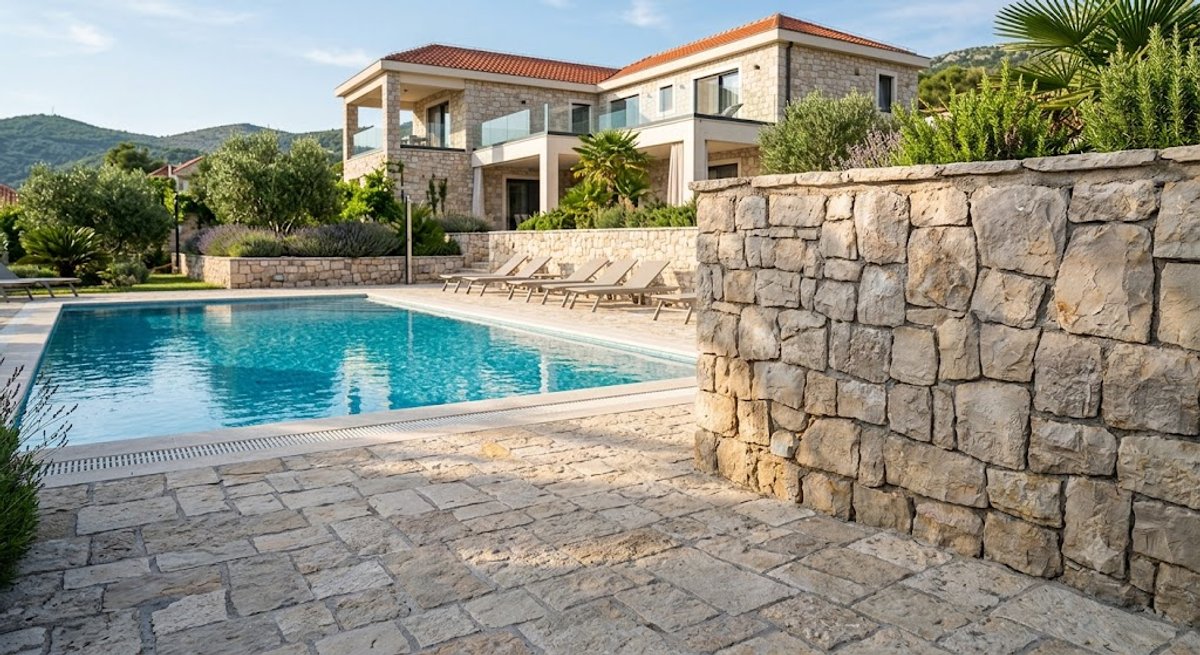
"Can we just run a cable from the nearest outdoor socket?" I hear this question almost every time we work on a pool installation — usually from a holiday home owner who has just had the pool finished and wants the filtration pump running as soon as possible. The answer is always the same: no — and the reason isn't bureaucracy.
Water and electricity don't mix. We know this instinctively. But what most homeowners don't know is that electrical installation around a pool isn't just a matter of "don't drop anything in the water" — it's a strictly regulated zone governed by the standard HRN EN 60364-7-702, which specifies exactly what you can install, at what distance, and with what protection.
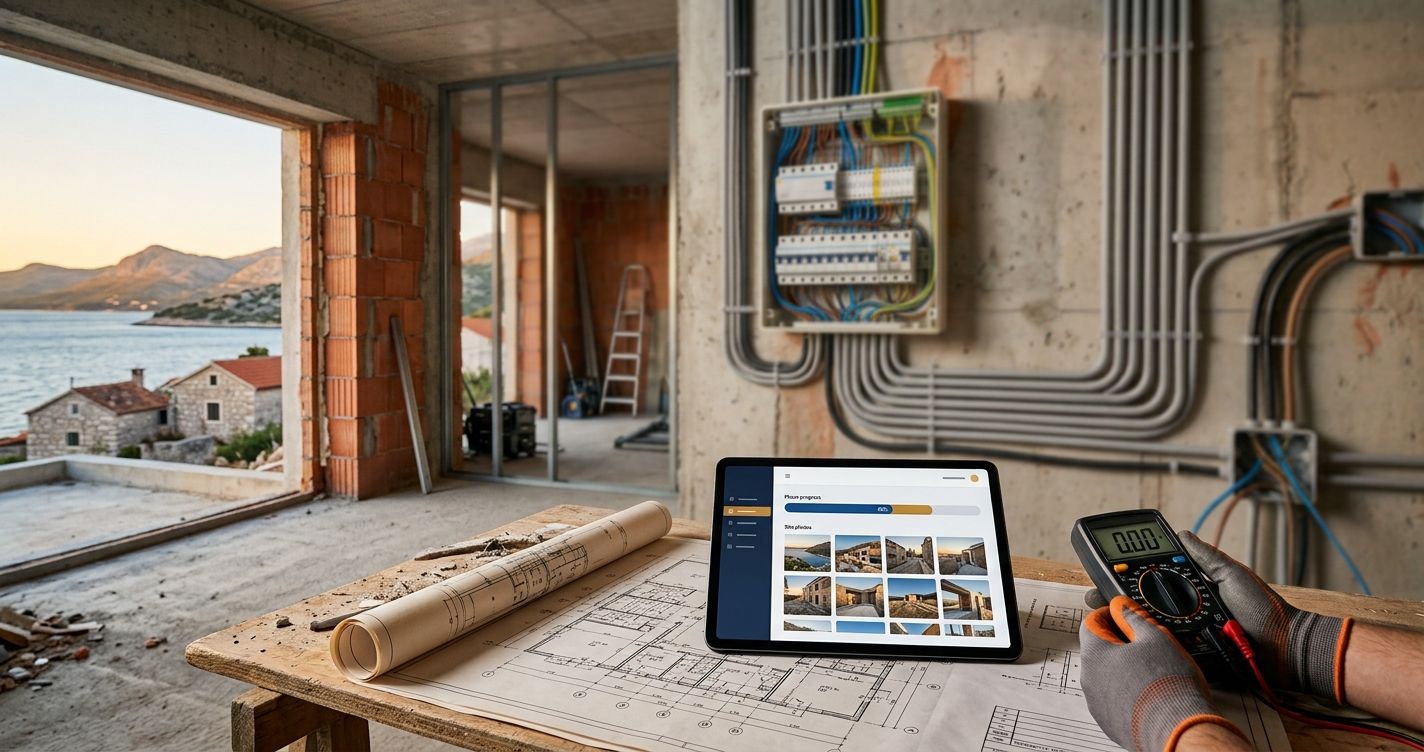
On projects across Dalmatia — from villas in the Šibenik and Zadar area to private homes with pools — this is one area where improvisation isn't an option.
The Protection Zones Around a Pool
The standard divides the space around a pool into three zones, each with its own requirements:
- Zone 0 — inside the pool itself. Only equipment specifically designed for full submersion is permitted here, powered by SELV voltage (Safely Extra-Low Voltage — below 12 V AC or 30 V DC).
- Zone 1 — the pool edge and 2 metres horizontally from it, up to 2.5 metres above ground level. Equipment must have at least IP X5 protection (resistant to a strong water jet), and all circuits must be protected by a 30 mA RCD.
- Zone 2 — 1.5 metres beyond the Zone 1 boundary. Fixed appliances — pump, heater — are permitted here with at least IP X4 protection (splash-proof).
A standard outdoor extension socket doesn't meet these requirements in any of these zones.
Equipotential Bonding — No Certificate Without It
Equipotential bonding is the process of connecting all conductive parts near the pool — metal handrails and ladders, the reinforced-concrete structure, pipework, pump, heater — to each other and to a common earth connection.
The reason: if a voltage difference exists between two conductive parts due to a fault, and you happen to touch both at once, current flows through your body. Equipotential bonding ensures every part is at the same electrical potential. No voltage difference — no current path through a person.
This measure is not optional. The standard requires it for every pool without exception, and it must be documented and verified as part of the electrical installation certificate.
RCD Protection — A Dedicated Circuit for the Pool
Every circuit feeding the pool zone must have its own 30 mA RCD (residual current device — a residual current circuit breaker that monitors leakage). The RCD constantly measures the difference between current flowing to a load and current returning. If any leaks — through a person or damaged insulation — a difference of just a few milliamps triggers a disconnection in a fraction of a second. 30 mA is the critical threshold: enough to cause cardiac arrhythmia, but with fast disconnection, not fatal.
A pool circuit must never share an RCD with the rest of the house, or have no RCD at all.
IP Ratings for Lighting and Equipment
IP rating (Ingress Protection) indicates how well a device resists water and dust. Around a pool, this isn't a label detail — it's a safety minimum.
Lighting and equipment in Zone 1 must have at least IP X5. Underwater lighting must be designed specifically for submersion. A common mistake is installing "outdoor" lights rated IP44 or IP54, which the packaging describes as "waterproof" — that's not the standard required near a pool.
The Mistakes We See Most Often
On sites across Dalmatia, these are the three most common failures:
- Extension cable to the pump — a "temporary" solution that became permanent. A socket with no cover, no RCD, sitting inside Zone 1.
- Missing equipotential bonding — metal handrails not connected to the earth loop, or bonding installed but never verified or measured.
- Pool on the household circuit — no dedicated circuit breaker or RCD specifically for the pool.
Each of these goes unnoticed until the first fault. Near a pool, a fault isn't a dimmed light. If you've noticed any of the warning signs of a faulty electrical installation in your home or holiday property, it's worth checking the pool installation too.
What the Regulation Actually Requires
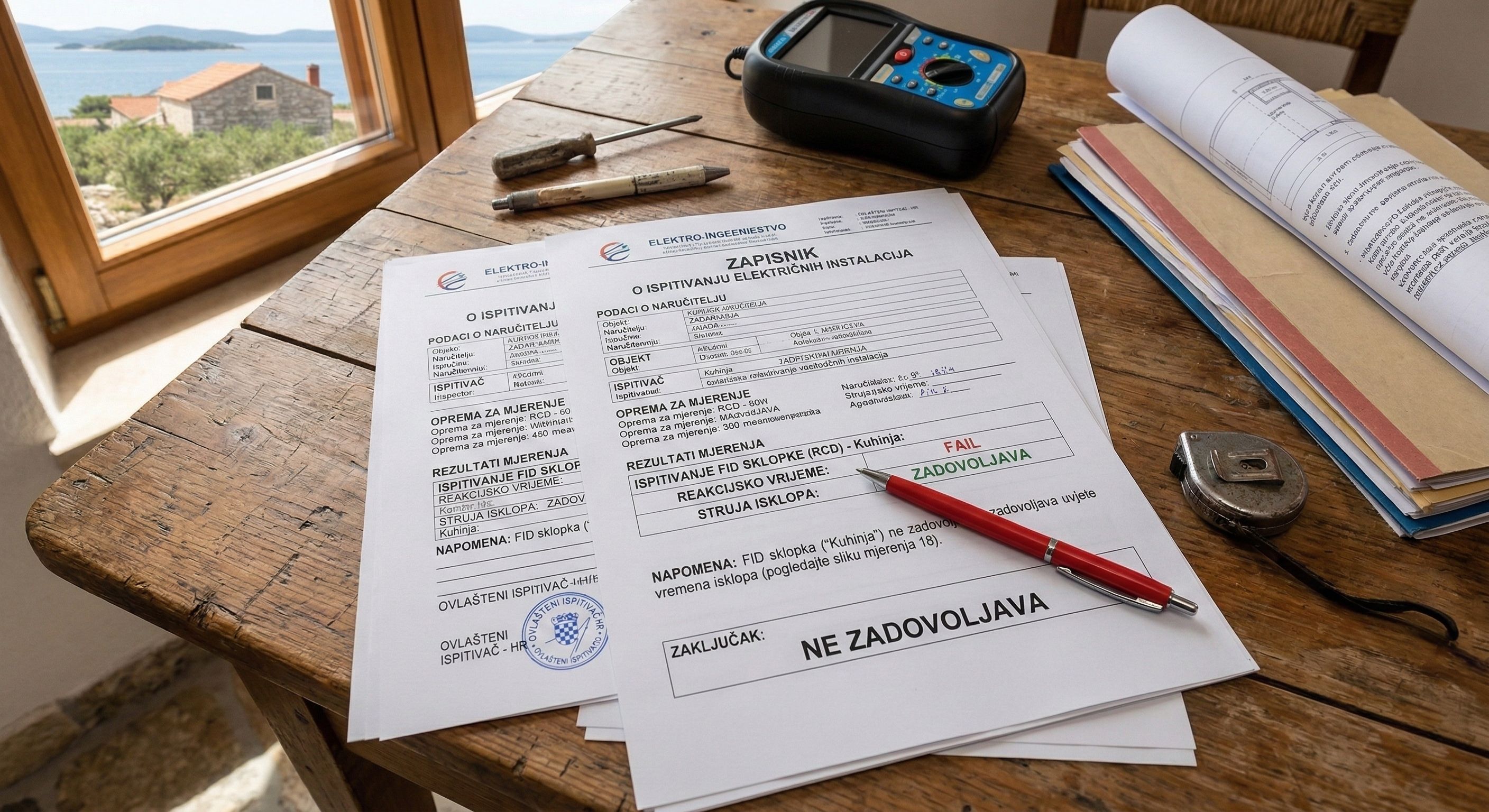
HRN EN 60364-7-702 is based on the European standard IEC 60364-7-702, which Croatia applies as a mandatory technical requirement. Pool electrical work must follow an approved electrical design, and once complete, a full measurement and electrical certificate (atest) must be issued.
Without a certificate, the installation is formally unaccepted. In the event of an incident, an insurer is not obligated to cover damages if the installation was never certified.
Planning a Pool or Unsure Whether Yours Is Safe?
If you're planning a pool build, or you have a property with an existing pool and you're not certain the installation is correct:
- Check whether there's a dedicated circuit with its own 30 mA RCD.
- Ask whether equipotential bonding was completed and documented.
- Request a certificate — not as a formality, but as proof the installation was measured and verified.
For more on main electrical installations and correct pool wiring, browse our services or get in touch for a free assessment of your property.